
17th Century – The Age of the Swedish Great Power Era
The Thirty Years’ War greatly expanded the Swedish realm. New winds were blowing in the Cathedral under the guidance of the strict bishops of the age of orthodoxy, yet education gradually began to spread among the wider population.
By the beginning of the new century, Lutheranism had been established as the state religion. The 17th century is known as the Age of Orthodoxy, during which the new doctrines were firmly instilled in parishes and among the population. Strict church discipline kept congregations under control and close supervision, but at the same time, education and learning increased. For example, the new university, the Royal Academy of Turku, opened its doors to eager students. The Cathedral also reached its present dimensions when the final side chapel was completed as a burial chapel in the 1650s.
The 17th century was also an age of war, during which Sweden rose to the status of a great power. In the Cathedral, this is clearly reflected in the various funerary monuments commemorating the wars Sweden fought, both on the territory of present-day Germany during the Thirty Years’ War and further east against Russia and Poland.
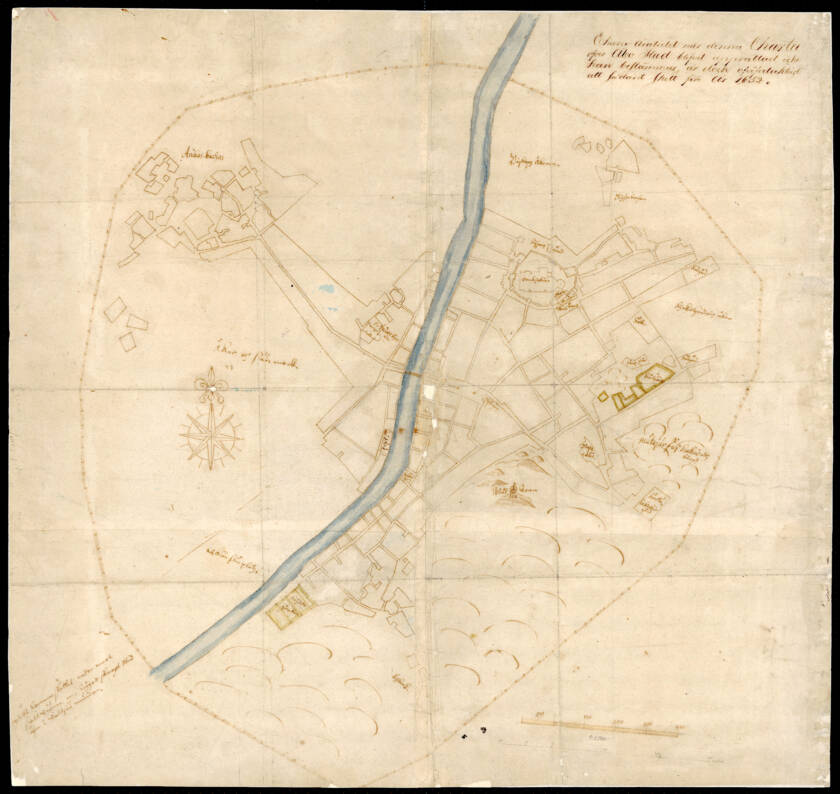
The city of Turku flourished during this period. Among other developments, the country’s first Court of Appeal was established there in the early part of the century. The first known map of the city was drawn up by Olof Gangius in 1634. By the end of the century, Turku’s population is estimated to have been between 5,300 and 6,800 inhabitants.
From Church Discipline to Parish Examinations – The Age of Orthodoxy
During the Catholic period, people had become accustomed to seeking help from saints and timing their annual agricultural work according to the calendar of saints. Expressions, names, and beliefs continued to carry both folk traditions and Catholic heritage into the post-Reformation era. However, efforts were made to change this. The 17th century is known as the Age of Orthodoxy, during which bishops and clergy sought to eradicate both Catholic practices and elements of folk tradition from parish life.
The Church Act of 1686 laid down detailed regulations concerning, among other things, the duties of the clergy, church penalties, and ecclesiastical practices. Church discipline applied to offenses that caused scandal or disturbance among the congregation but were not severe enough for secular courts. Fighting, drunkenness, dancing, and absence from church were all punishable offenses. Penalties could be monetary fines or public shaming punishments, such as sitting in the stocks. The law also stipulated that no work or entertainments such as theatre were permitted on holy days. Since everyone was expected to attend church, services also became important occasions for sharing news and social interaction.
The same Church Act also introduced parish examinations (kinkeri). These annual gatherings were held within each parish, where individuals had to demonstrate their ability to read the Catechism and their knowledge of the Bible. In this way, both literacy and understanding of Christian doctrine were tested. Only after passing could one marry, and those who performed poorly risked punishment such as the stocks. To promote literacy, the office of parish clerk (lukkari) was strengthened by Bishop Johannes Gezelius the Elder (1615–1690), who was otherwise an important promoter of popular education. Parish examinations became a major step forward in the development of literacy and public education in Finland. The parish registers used at these events also represent the first form of population records in Finland and remain an important source for genealogical research.
Isak Rothovius – Reformer of the Finnish Church
The first bishop of the Age of Orthodoxy is considered to have been the Swedish-born Isak Rothovius (1572–1652). During his strict tenure, and largely at his initiative, new parishes were established in Finland, the Royal Academy of Turku opened in 1640, and the complete Bible was published in Finnish in 1642.
Rothovius also restored the Cathedral, which had fallen into disrepair after an earlier fire. The roof was renewed, the walls were repainted, and the Cathedral received new organs. In addition, the church tower was fitted with its first clock face in 1638.
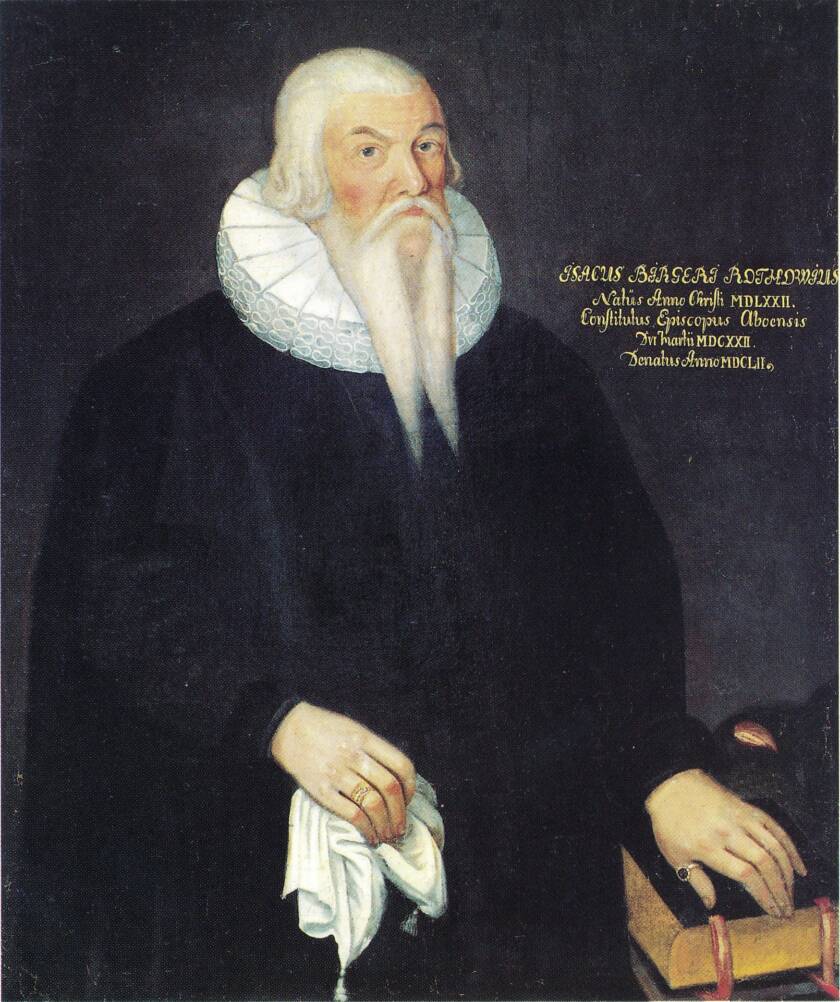
Isak Rothovius. Image: Wikipedia
Rothovius also intervened in the activities of parish clergy. Following Swedish practice, he drew up diocesan statutes as guidelines, the most extensive of which contained 103 articles. These rules, or constitutions, provided instructions on matters such as proper church interior arrangements, the order of services, and appropriate behavior in church. Violations of these rules could result in fines.
First, all people shall gather in their parishes at the proper time, before they eat or drink anything, so that by eight o’clock they are all assembled—fasting, sober, and properly prepared to attend to their worship of God.
Although Rothovius energetically reformed church affairs in Finland, he never seemed to feel at home in Turku. In a letter to his friend, the Lord High Chancellor Axel Oxenstierna, Rothovius described himself as living “among barbarians and scorpions.” Rothovius died in 1652 and was buried in the Cathedral in the central aisle. He had chosen his burial place in advance, making room for himself by having a medieval grave exhumed.
The Royal Academy of Turku
As the policies of the Age of Orthodoxy aimed to standardize and elevate the knowledge and skills of clergy in leading their parishes, Finland also needed its own university to provide this education. In 1638, Finland’s Governor-General Per Brahe wrote that “the Finns are a simple people in need of theological and civic education.”
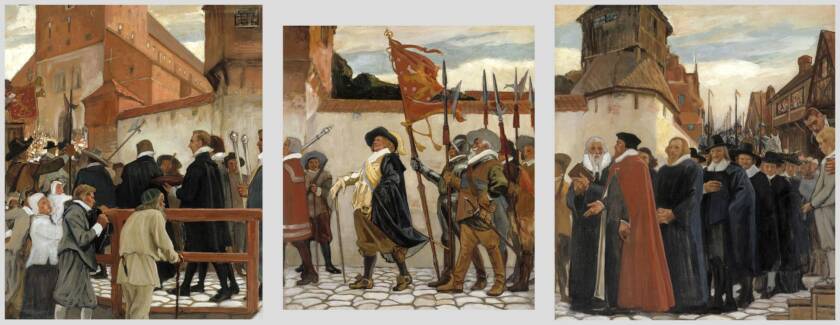
Thus, in 1640, the Royal Academy of Turku was founded in a building within the Cathedral’s surrounding wall. The formal inauguration ceremony was held on July 15. In Albert Edelfelt’s painting, Per Brahe and Isak Rothovius can be identified among those present. The Royal Academy was the third university in the Swedish realm. The oldest had been founded in Uppsala in 1477, and the second in Tartu (Dorpat) in 1632, when the city was under Swedish rule.
Students at the Academy included future priests, physicians, and assessors of the Court of Appeal. Following the classical model, the university had four faculties: theology, philosophy, law, and medicine. At its founding, the Academy had eleven professors and approximately 200 students. Latin was the language of scholarly publications. Finland’s first printing press was also established at the Academy in 1642. There, the country’s first printed work—and its first doctoral dissertation—was produced: Professor Mikael Wexionius’s “Discursus politicus de prudentia” (A Political Treatise on Prudence).
The Academy enjoyed a degree of autonomy. If students caused disturbances—for example, by engaging in tavern brawls—they were accountable to the rector and professors. Punishments could include confinement in the Academy’s own jail, or in the most severe cases, expulsion from the university.
The Cathedral and the Academy were closely connected. The Academy building was constructed within the Cathedral’s surrounding wall, and in 1689 a dedicated entrance from the Academy into the Cathedral was created. Priests educated at the Academy could advance to become professors and eventually even bishops. The relationship between the Crown and the Academy was overseen by the chancellor. The vice-chancellor was the Bishop of Turku, who often intervened in the workings of the university. The professorships in theology were held by the dean of the Cathedral and two other members of the cathedral chapter or by parish rectors from nearby congregations.
Doctoral dissertations of the Royal Academy of Turku have been digitized and are available in the National Library’s Doria repository. You can access them via the link.
The Cathedral’s New Interior – The Pulpit and Disputes over Seating
During the century, the interior of the Cathedral also became more in line with Lutheran ideals. Visitors now entered a plain church where medieval wall paintings had been covered with white paint. At the same time, coats of arms and portraits of noble families gradually began to appear on the walls. The side chapels had been emptied of their saintly altars and were instead sold to families as burial places and vaults. The Cathedral also reached its final dimensions when the Kankainen Chapel, near the main choir, was completed in 1657.
The side altars had been abolished, and worship life was centered around a single altar—the main altar. Until the mid-17th century, the altar still stood in its medieval location within the octagonal pillars in the nave. After this, it was moved to its present location, the former Choir of All Saints. Services were held in both Finnish and Swedish.
Alongside the altar, the pulpit—rising high above the congregation—became the central feature of worship, from which the Word of God was preached. The Cathedral’s pulpit was built in the same location as the present one. The first mention of a pulpit in the Cathedral dates from 1622.
From the pulpit, the priest could see the entire seated congregation. In the Middle Ages, the church had contained scattered, privately owned chairs. In the 17th century, however, the congregation was provided with uniform church pews from which to follow the service. Reflecting the rigid structure of the class-based society, from 1632 onward the seating arrangement dictated where each person could sit—pew spaces had to be paid for, and rows could be locked. The nobility were given the best seats at the front of the nave, followed by the burghers, and then the peasants. The poorest members of society had to make do with places at the back of the church.
Women sat on the pews on the north side of the church, while men sat on the south side.
The seating order inevitably caused resentment within the congregation, because the new arrangement ranked the people of Turku in a very visible way. Complaints poured in to the parish council about poor seats and about people who had “stolen” someone else’s place. “The sister of the county treasury keeper’s wife is squeezing my daughter in the pew!” complained a Court of Appeal assessor named Wassenius. Nor were physical altercations avoided: when intruders forced their way into pews, tempers flared—insults flew, and in the worst cases it came to blows. To calm the situation, the seating order had to be revised several times.
There were also gallery levels in the Cathedral, from which especially craftsmen followed the service. They are said to have dripped various questionable liquids onto the necks of unsuspecting worshippers sitting below. The problem seems to have been fairly common in churches, since it was specifically addressed in church regulations: the fine for spitting downwards was one silver thaler.
From side altars to burial chapels – graves in the Cathedral
With the Reformation, the side chapels dedicated to saints in the Catholic period were emptied and became unnecessary. Ecclesiastical rites now centered on the main altar, and the congregation was seated in pews to follow the service. At the same time, the Church had become poorer, as the Crown was granted the right to confiscate most of the Church’s property. A solution was found in selling the side chapels as burial chapels to wealthy families. In addition, places throughout the nave were sold as family graves. A burial place inside the church could cost many times more than a grave in the churchyard outside, and for that reason most people of Turku were buried outside the Cathedral’s walls.
Since the Middle Ages, bishops and other churchmen had found their final resting place in the church, but in the early modern period anyone with enough money could buy a place. Over the years, the Cathedral has become the burial place of nobles, merchants, mayors, officials, war heroes—and even one member of royalty. Altogether there are around 4,500 graves. Some are brick-lined graves or vaulted tombs, while the rest are earth (soil) graves. Burial inside churches was banned in 1784.
Next, a few notable figures from the 17th century are introduced, whose graves are found in the side chapels of the Cathedral.
The beautiful and gentle Queen of Sweden, Karin Månsdotter
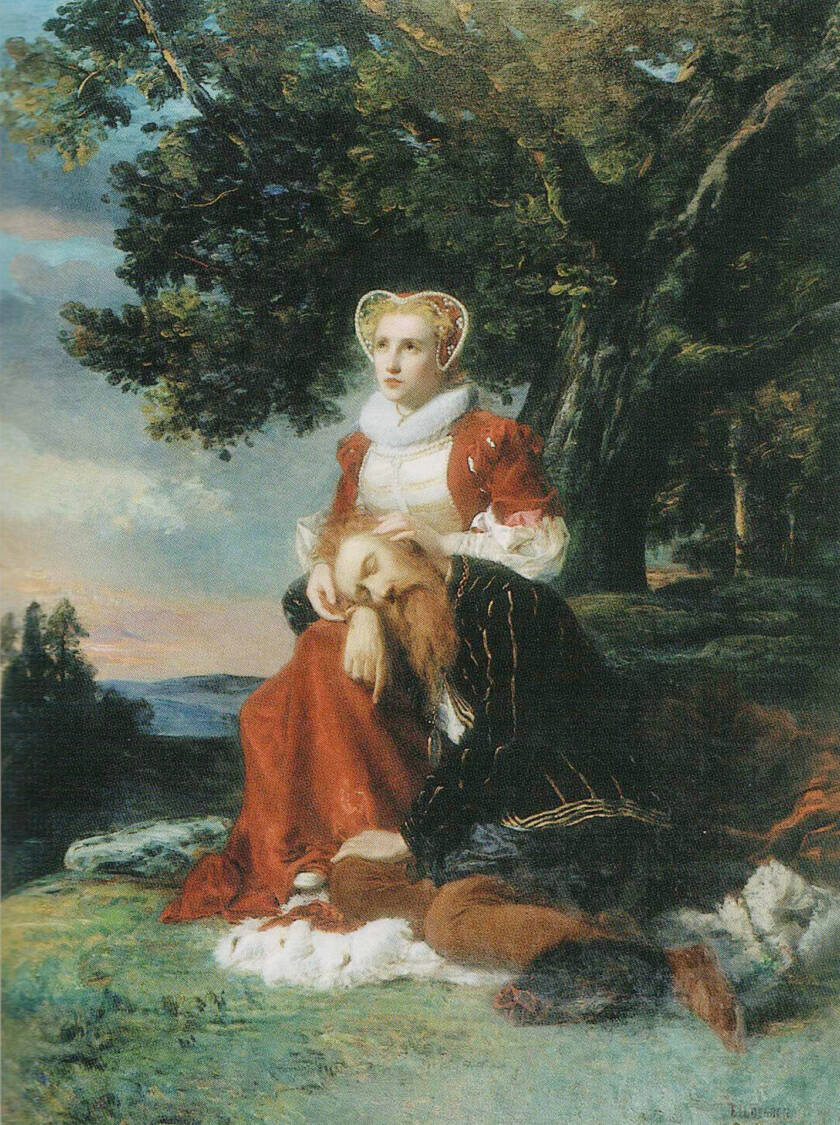
Perhaps the most famous person buried in the Cathedral is Karin Månsdotter (1550–1612), Queen of Sweden. Karin was married to Gustav Vasa’s eldest son, King Eric XIV of Sweden (1533–1577). Eric inherited the crown in 1560. Gustav Vasa’s other sons received duchies around the realm, and Eric’s brother John became Duke of Finland. Eric was said to be a hot-tempered man of the common people; one of his aims as king was to reduce the power of the nobility. Desperately seeking a royal bride, Eric sent proposals to courts across Europe, receiving refusal letters time after time.
According to estimates, the couple met in 1565, when Karin was only 14 years old. The daughter of a nihti—a foot soldier—Karin caught the king’s attention with her beauty and determination, and Eric and Karin became lovers. It was by no means unusual for royalty to have several mistresses and children by them. Taken into the royal court, Karin learned to read and write, and her position as the king’s mistress was respected. Karin and Eric had their first child, a daughter named Sigrid, the very next year.
The year 1568 was significant for Karin in many ways. At the beginning of the year, Eric and Karin married, since Eric’s marriage proposals still had not produced any result. Karin was also said to have been the only person capable of calming the unpredictable and fiery Eric. After the marriage, the couple had a son, Gustaf (Gustav Eriksson), who became the official heir to the throne. Even more sensational for Sweden was the public wedding ceremony at Stockholm Cathedral on July 4, 1568. Low-born Karin had become the king’s spouse, borne the realm an heir—and the day after the wedding she was crowned queen.
Behind the scenes stood Eric’s brother, Duke John of Finland. John had gathered the support of nobles who were dissatisfied with Eric’s rule and with his decrees reducing the power of the nobility. The coronation of Karin—of non-noble birth—as queen became the spark that ignited this simmering discontent, and as a result Eric was deposed in September 1568. The couple, along with their children, were imprisoned.
The family was held captive in various castles across Finland and Sweden, including Turku Castle. During her imprisonment, Karin gave birth to two more sons, Henrik and Arnold, who both died at a very young age. Henrik is buried in the Cathedral. In the summer of 1573, after nearly five years in captivity, Karin and Eric were separated. Their eldest son, Gustav, was sent to Poland by John. Karin was brought back to Turku Castle, while Eric remained imprisoned in Västerås Castle for the rest of his life, where he died in 1577—according to tradition, poisoned with arsenic hidden in pea soup.
After Eric’s death, Duke John, now King John III of Sweden, granted the 26-year-old Karin and her daughter Sigrid the Liuksiala Manor in Kangasala. There, mother and daughter spent their lives, developing the estate into one of the most productive farms in Finland. Karin was regarded as a kind and capable estate manager who was highly respected. Even during the peasant uprisings of the Cudgel War, her estate was left undisturbed.
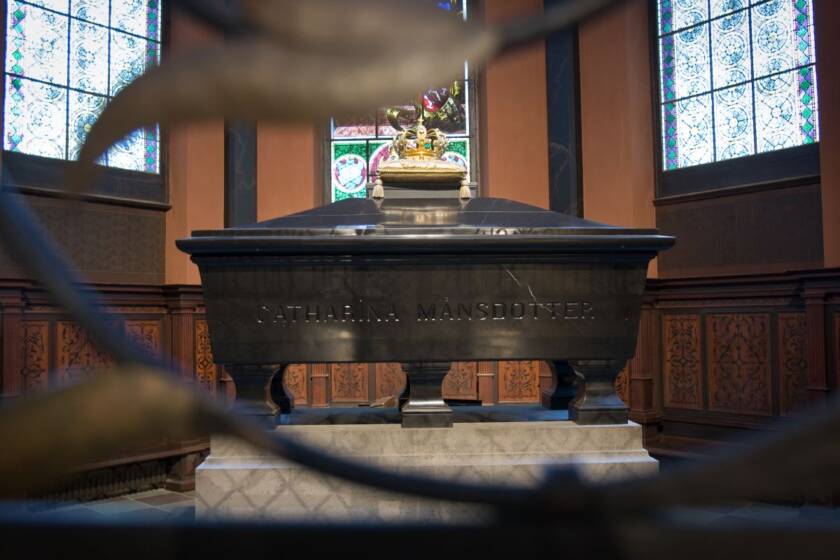
Karin died in Kangasala on September 13, 1612. She was buried in the Cathedral, the only member of royalty interred in Finland. Initially, she was buried beside her son Henrik in what is now the Tott Chapel, where her daughter Sigrid was later also buried. However, after the Great Fire of Turku in 1827, restoration work transformed the Kankainen Chapel into a burial chapel befitting a queen, and in 1867 her remains were transferred into a black marble sarcophagus.
Karin and Eric’s daughter Sigrid married and had children, and through her their lineage continues to this day. Even today, fresh flowers are always found at Karin’s grave.
Wars in the East – Evert Horn and Samuel Cockburn
Gustavus Adolphus ascended the Swedish throne in 1611. During his reign, Sweden’s administration and judicial system were significantly developed with the assistance of Lord High Chancellor Axel Oxenstierna. Gustavus Adolphus is particularly remembered as a conquering king who earned the nickname “The Lion of the North.” During the warlike early decades of the 17th century, Sweden expanded its territories into regions such as Karelia, Livonia, and northern parts of present-day Germany.
To the east, Sweden fought wars in areas that are now part of Poland and Russia. The war with Poland had already begun in 1600 under King Charles IX, during which Sweden succeeded in conquering large parts of Polish Livonia. From 1610 to 1617, the Ingrian War was fought against the Tsardom of Russia.
Among those who distinguished themselves in the Polish and Ingrian wars was Field Marshal Evert Horn (1585–1615), who also served as a mentor in military skills to Gustavus Adolphus. Horn was born in Estonia and received the finest education of his time, as he belonged to one of Finland’s most prominent noble families. His first major battle took place during the Polish War in 1605. His real military success, however, came during campaigns in Russia, in which Sweden participated as an ally of Russia against Poland.
In 1609, the expedition was led by Count Jacob De la Gardie—known in Finnish as “Lazy Jacob”—with Horn as his deputy. Their forces marched to Novgorod and from there to Moscow. With Horn leading the vanguard, the allied forces succeeded in defeating the Polish troops in several battles.
In 1610, the Ingrian War broke out between Sweden and the Tsardom of Russia and continued for several years. During this time, troops led by Horn captured several fortresses in Ingria. Over the course of his career, Horn developed a new Swedish-Finnish cavalry tactic that would later prove useful even during the Thirty Years’ War.
In 1614, the young King Gustavus Adolphus himself came to learn military skills from Horn. The following year, under the king’s observation, Horn demonstrated how the besieged city of Pskov might be captured. However, in the battles that followed, Horn himself was killed.
The funerary monument of Evert Horn and his wife Margareta Fincke (c. 1578–1647) can be found in the Tavast Chapel. The monument bears inscriptions from the Bible in both Swedish and Latin, as well as the coats of arms of their families and other decorative elements. Their son, Gustaf Evertsson Horn, was one of the builders of the Kankainen Chapel in the Cathedral, where Evert Horn’s remains were later transferred.
Samuel Cockburn (1574–1621) also fought in Horn’s troops. A nobleman from Scotland, he entered Swedish service as a mercenary in 1606. In Sweden, he adopted a more Swedish form of his surname: Cobron. Cockburn rose to the rank of colonel and served until the end of the Ingrian War. The Treaty of Stolbovo was concluded in 1617, granting Sweden territories including Kexholm County and Ingria.
After the peace treaty, King Gustavus Adolphus set his sights on a new objective: Riga. In the spring of 1621, Cockburn was appointed commander of the Finnish cavalry, and his forces were sent to besiege the city. During the battles against Polish troops, Cockburn was wounded and died shortly thereafter.
Mercenaries could be a volatile force within an army, as delays in payment often led them to change sides. Cockburn, however, remained loyal to the Swedish army and was rewarded with positions of trust and land grants in Ostrobothnia and along Finland’s southern coast.
Cockburn was buried in the Cathedral at the request of his widow. His memorial features the Scottish thistle and the English rose. During 19th-century nationalist restoration work, additional symbols were added, including the French fleur-de-lis—also found in the coat of arms of Turku—and the Finnish lion. The Latin epitaph on top of the monument praises the colonel and was commissioned by Cockburn’s brother.
O Cockburn, you lived bravely and died untamed; with you you carry to the same grave both Mars and Minerva. Therefore neither the Scots nor the Swedes can be more sorrowful, nor the Poles more joyful.
Heroes of the Thirty Years’ War – Åke Tott and Torsten Stålhandske
In May 1618, a war broke out in the Holy Roman Empire—primarily in what is now Germany—that later came to be known as the Thirty Years’ War (1618–1648) because of its length. The conflict arose from long-standing tensions within the empire between Protestants and Catholics and developed into one of the most devastating wars in world history.
Sweden entered the war in 1630, landing in the region of Stettin under the leadership of King Gustavus Adolphus. The Swedish army joined in to support the Protestants, but the war was also driven by Sweden’s ambition to dominate the Baltic Sea.
One of the field marshals who gained particular renown during the war was Åke Tott (1598–1640), born in Lohja. He was the son of Sigrid Vasa and Henrik Tott, and the grandson of Queen Karin Månsdotter and King Eric XIV. Having joined the campaign alongside Gustavus Adolphus, Tott rose rapidly to the rank of cavalry general and field marshal. The king even gave him the nickname “The Snowplow of the North.”
In 1632, at the Battle of Lützen, King Gustavus Adolphus was killed, and Åke Tott brought the king’s body back to Sweden. Soon after, Tott himself ended his military career due to failing health. Back in Sweden, he took on political duties as a member of the Council of the Realm. Tott held extensive estates in Finland, Estonia, and Sweden, and he adorned his manors with the spoils of war.
Åke Tott died in Eurajoki on July 15, 1640, and was buried in the Cathedral. His wife commissioned an impressive Baroque funerary monument in the Chapel of St. Lawrence, which the family acquired for a price of 500 barrels of grain. The monument, sculpted by Peter Schulz and completed in 1678, depicts both Åke Tott and his widow, Countess Christina Brahe (1609–1681). The couple is shown standing in life-size figures upon a pedestal. The monument also displays the coats of arms of their families, and its canopy features biblical imagery, including angels and Christ. The wall paintings and present appearance of the chapel date from the period following the Great Fire of Turku in 1827.
Åke Tott’s funeral procession from Turku Castle to the Cathedral was attended, among others, by eight companies of soldiers, the professors and students of the newly established Turku Academy, and all the burghers of the city. Bringing up the rear were six carriages filled with women.
Torsten Stålhandske (1593–1644) fought in the same campaigns as Åke Tott. He served, among other roles, under Tott in the battles of Livonia. Stålhandske gained particular renown as the general of the Finnish cavalry—the Hakkapeliitta. Their name derived from the fierce battle cry “Hakkaa päälle!” (“Strike them down!”), shouted by the armored horsemen as they charged the enemy.
Stålhandske continued fighting until 1644. He had previously been wounded in battle, and then fell seriously ill. He died of illness in Denmark on April 21, 1644, and was buried in the Cathedral. The year before, he had married Christina Horn (1604–1673). Widowed, Christina acquired the medieval Chapel of Souls as her husband’s burial place. The funerary monument, sculpted by Jürgen Meintz of Hamburg, depicts the couple atop a tomb chest.
The rest of the chapel’s appearance dates from the period after the Great Fire of Turku. At that time, Torsten’s tin coffin was raised into the chapel, and the armor of both Åke Tott and Stålhandske—found in their respective chapels—was also gathered there. The painted decoration was created by the architect Jac. Ahrenberg. The arch of the doorway bears inscriptions of the battles in which Stålhandske took part during the Thirty Years’ War. The heraldic stained-glass window was made by Wladimir Swertschkoff; however, the artist mistakenly used the coat of arms of the Finnish Stålhandske family instead of that of Torsten’s own Swedish branch.