Turku Cathedral Museum
Founded in 1929, the museum is approaching its 100th anniversary. During the renovation of the Cathedral, the museum exhibition will be renewed, and the museum will reopen in the south gallery once the renovation is completed.
Collections from the Middle Ages onwards
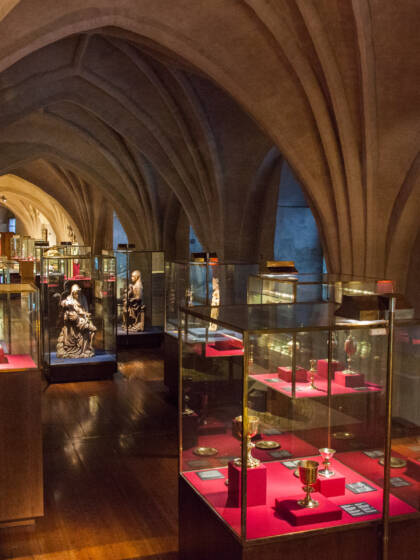
The collections of the Turku Cathedral Museum include objects from nearly the entire span of the Cathedral’s existence. From the Catholic Middle Ages, several statues of saints have been preserved, while from the early modern period there are liturgical silverware, chasubles, and other items related to Christian church culture.
Highlights from the Turku Cathedral Museum collections
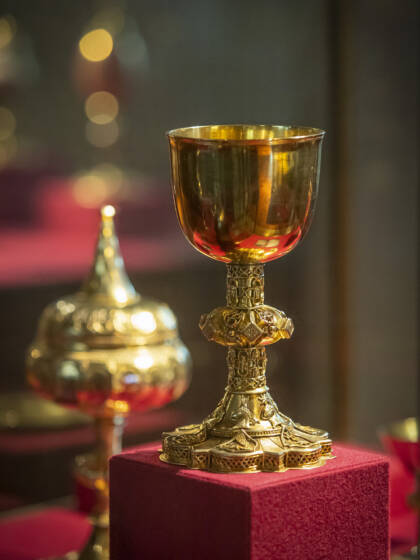
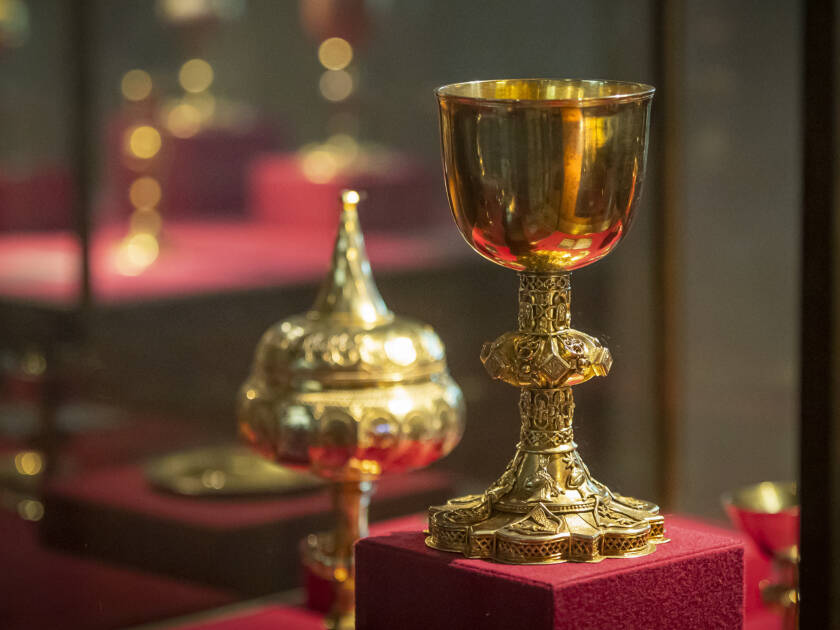
The Ejby chalice
In the mid-16th century, King Gustav Vasa confiscated large quantities of valuable objects from churches for the state treasury. For this reason, very few valuable ecclesiastical objects from the Middle Ages have survived in Finland.
The golden Ejby chalice is an exception. It was most likely made for the consecration of the Chapel of All Saints (now the main chancel) of the Cathedral in the 1480s. However, the Danish pirate Otte Rud stole it from the Cathedral during a raid on Turku in 1509. The chalice ended up in Denmark, in the church of Ejby. It was returned to Turku Cathedral in 1925. The base is original, while the cup was renewed in Denmark in 1851.
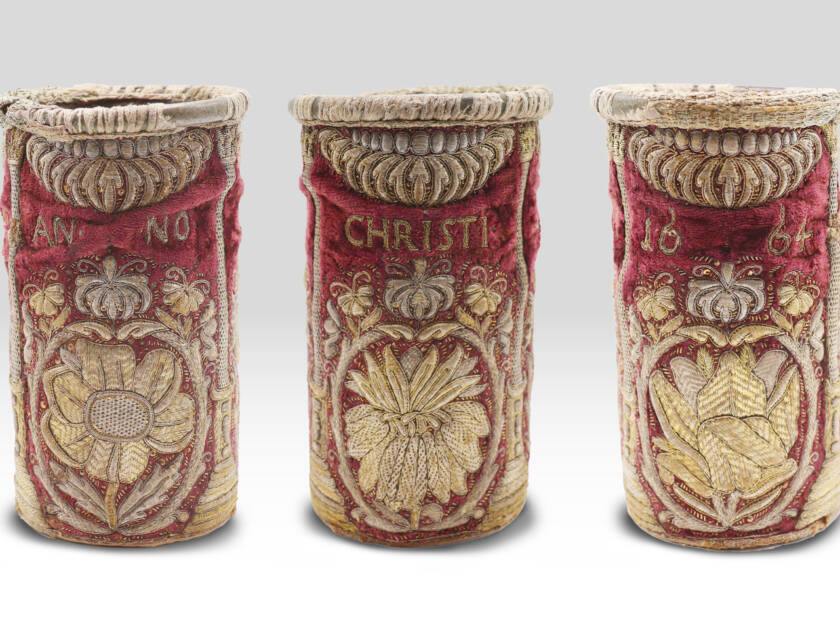
Collection Bag from 1664
Already during the Catholic Middle Ages, the Church collected funds to help the poor and the sick. Churches had alms boxes, that is, collection containers into which people could place monetary donations. Funds for the poor were collected at the Altar of St Martin, while donations for lepers were gathered at the Altar of St George. With the beginning of the early modern period, charitable giving did not disappear; it merely changed form. The Church Ordinance of 1571 instructed that funds should be collected for the poor in connection with church services. In 1633, Isak Rothovius, Bishop of the Diocese of Turku, decreed that a collection bag should be carried around on Sundays to gather funds for parish activities.
The collections of the Turku Cathedral Museum include a collection bag dating from 1664, made of red velvet and decorated with silver and gold thread. (The photograph shows the same bag viewed from three different angles.) Originally, the bag was fitted with a handle and a small silver bell. Its ringing sound informed the congregation where in the church the collection bag was currently being carried. The names of the burghers Jochim Wolterstorph and Barthold Festing were engraved on the handle.