
14th century – The Birth of the Cathedral
The episcopal see is transferred from Koroinen to Unikankare, and the new Cathedral is consecrated. Dense settlement develops along the Aura River, and the city of Turku begins to grow ever larger.
The Origins of the City of Turku
In the Middle Ages, the center of Turku was located around what is today the Old Great Square. The Hanseatic League—a commercial alliance of German cities—had invigorated trade in the ports of the Baltic Sea, including Koroinen and Turku. Finnish furs and fish were exported abroad, while goods such as salt, textiles, and luxury items found their way into Finnish homes. German merchants settled in the area and initially formed the majority of Turku’s burgher population.
In 1249, Dominican friars arriving from across Sweden established the Dominican convent of St. Olaf. By the 14th century, it became established on the slope of Kaskenmäki hill. The Cathedral School—Finland’s first school, which trained priests—had already been founded in the late 13th century.
According to current estimates, the city of Turku was founded between 1280 and 1300. Around the same time, Turku Castle began to be built as an administrative fortress of the Swedish Crown. The city grew gradually, and by the end of the 14th century, Turku had an estimated population of 800–900 inhabitants. The city was governed by three authorities: the Church, the Crown, and the burghers.
“On this side of the river!” At first, the city of Turku was bounded by the Aura River and was located on the same side as the Cathedral.
The Consecration of the Cathedral
Over 700 years ago, Turku was filled with festive celebrations in June. On the hill of Unikankare, near what was then the center of Turku, the church was consecrated as a Cathedral on June 17, 1300, when the episcopal see was moved from Koroinen, a couple of kilometers away, to its present location. The following day, June 18, the relics (bones) of Saint Henry were ceremoniously transferred from Nousiainen to the Cathedral in a translation ceremony. The patron saints of the Catholic Cathedral became the Virgin Mary and Saint Henry. (If the story of Bishop Henry is alien to you, read the material of this guide tour.)
What kind of church stood on Unikankare hill in the year 1300? Several interpretations have been proposed. Most likely, the church included a small stone sacristy where a bishop’s election had already been held in 1291. At that time, Maunu I, the first Finnish-born bishop, was elected. Attached to the sacristy was a wooden aisleless church, smaller and narrower than the present Cathedral and without side chapels.
The Finnish term tuomiokirkko (Cathedral) is actually the result of a mistranslation. The Swedish word domkyrka does not refer to “judgement” (tuomio), but to the Latin word domus, meaning “home.” Thus, a Cathedral is a “home church”—the bishop’s home church.
Many people wonder whether the Cathedral is the oldest church in Finland. It is not. The site of the oldest known church is located at Ravattula’s Ristimäki in Kaarina, a few kilometers upstream along the Aura River. Archaeological excavations in 2013 uncovered remains of a church and churchyard that had been in use from the late 12th to the early 13th century. The oldest stone churches still standing, however, are found in Åland. Finland’s oldest stone building, Jomala Church, is estimated to have been built between 1275 and 1285.
The Treaty of Nöteborg
From the late 12th century onward, Finland gradually became integrated into the Kingdom of Sweden—first through the Church and later also through the Crown, that is, the administration. When we speak of medieval Finland, we are referring to a relatively small area compared to the present-day size of the country.
The early 14th century was a time of unrest. Sweden and the eastern power, the Novgorod Republic, had fought for years over territories along Sweden’s eastern border. In 1318, the Novgorodians burned and plundered, among other places, the city of Turku, including the Cathedral.
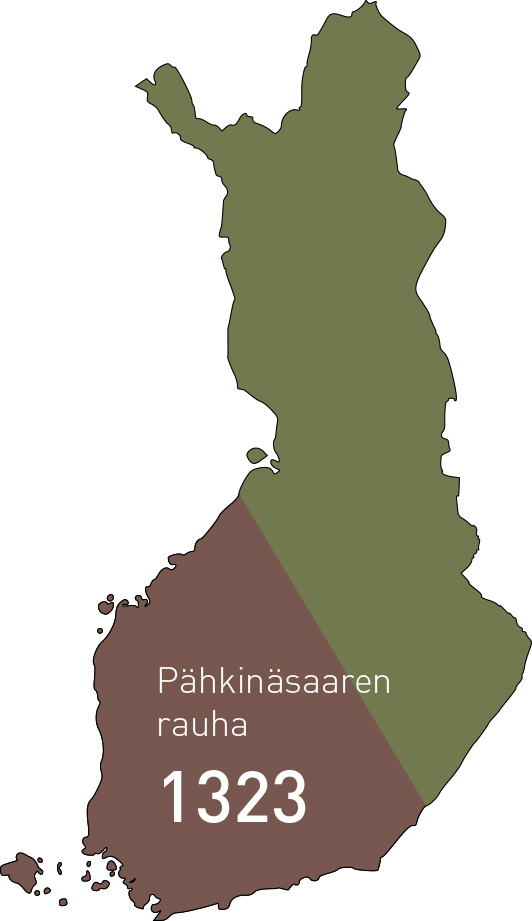
Hostilities subsided, and the border between Sweden and Novgorod was established in the Treaty of Nöteborg (Pähkinäsaaren rauha) in 1323. This treaty defined, for the first time, Sweden’s exact eastern borders (shown in brown on the map). Finland—also referred to as the eastern part of the Swedish realm—extended from the eastern end of the Gulf of Finland almost to the northern reaches of the Gulf of Bothnia. From the perspective of the Church, Finland was governed as a single diocese: the Diocese of Turku.
Bishop Hemming – An Influential Bishop
The Cathedral, devastated by the Novgorodian attack in 1318, remained in a sorrowful state for decades. As late as 1335, the vicar of Savo lamented in his will the ruined condition of the Cathedral. There is therefore no precise information about the state of the Cathedral between these two dates. Most likely, a wooden church was built to replace it, but archaeological findings also indicate that activity increased at the site of the former episcopal church at Koroinen in the early 14th century. The church at Koroinen remained in use until the end of the century.
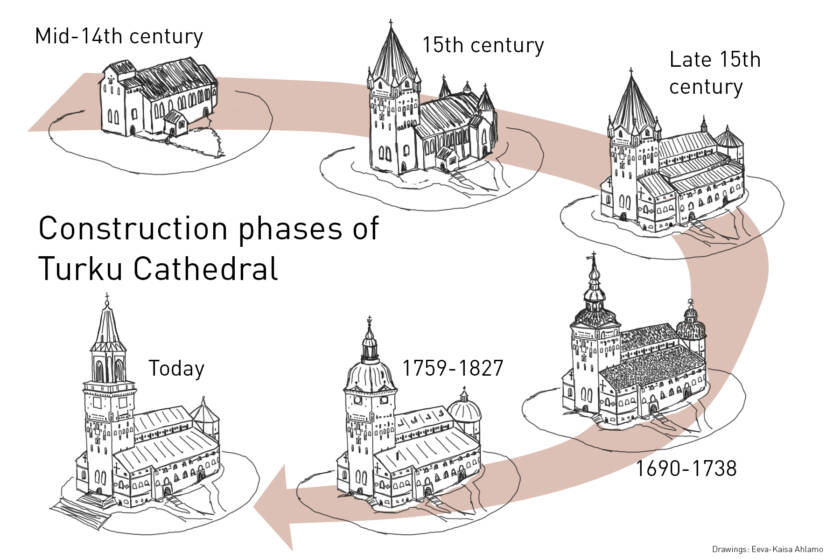
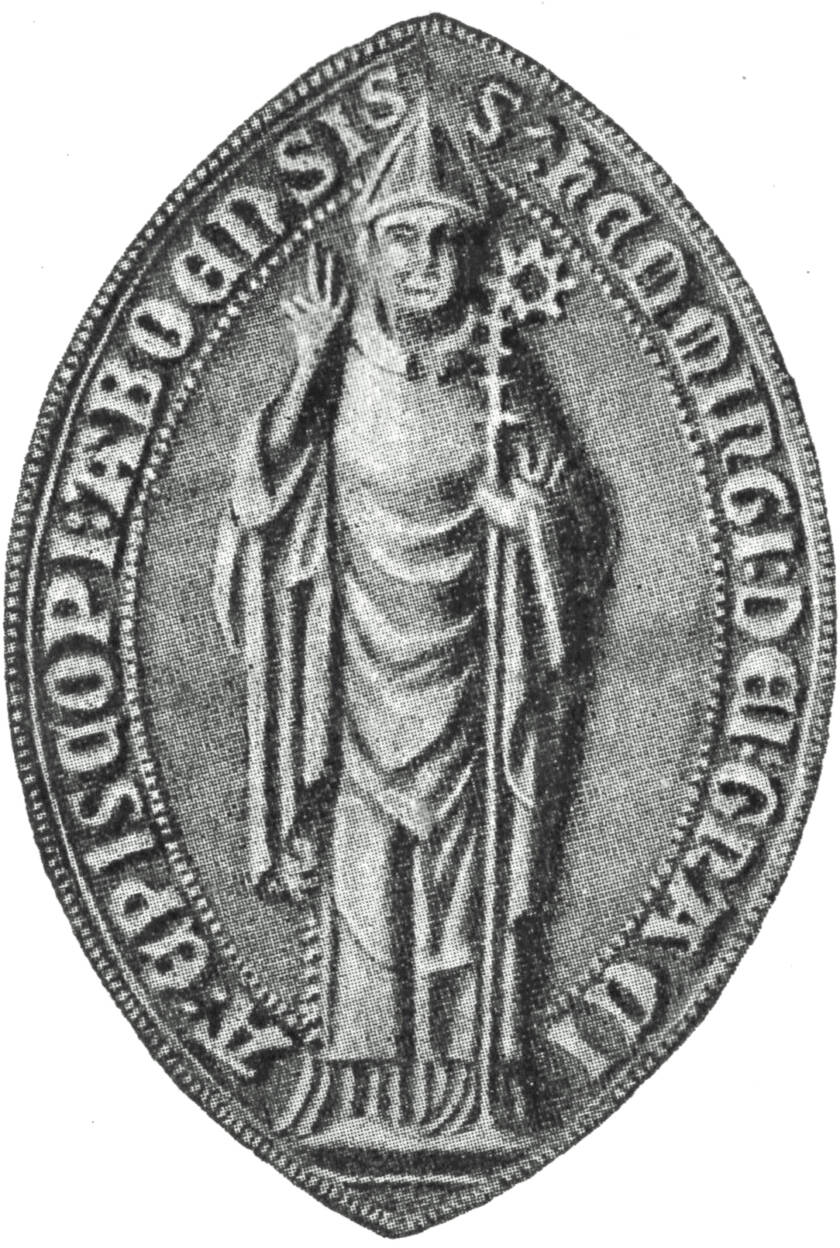
In 1338, Hemming (c. 1290–1366), a native of Uppland, Sweden, who had studied in Paris, was elected Bishop of the Cathedral. During Bishop Hemming’s tenure, the Cathedral rose from its ruined state, and the nave was finally vaulted in stone and brick. The vaulting arches in the ceiling of the side aisles thus date from around the mid-14th century. The eastern end of the three-aisled nave featured a five-sided choir, while the southern side included two porches that served as entrance spaces to the church. At the western end stood a relatively low tower chamber, and on the northern side there was a sacristy. There were not yet any side chapels in the Cathedral at this time.
The Cathedral most likely had a library from its earliest years. Bishop Hemming was one of its most notable donors, contributing more than 40 works that he had acquired during his travels abroad—at a time when there was no printing press in Finland. Works were also produced by the bishop himself, as he authored several texts aimed at improving the level of education among the clergy. During Bishop Hemming’s time, additional altars dedicated to saints were established in the Cathedral, and many valuable objects and decorations were acquired. Hemming’s good friend, Saint Bridget—later the patron saint of Sweden—wrote of the diligent bishop: “Hemming is always running, except when he sleeps.”
When Bishop Hemming died in 1366 while praying, he was buried in the Cathedral. His influence continued even after his death. A candle was burned daily at his grave until the end of the Middle Ages, and intercessory prayers began to be addressed to him—that is, people sought his help through prayer. Over time, many of these prayers were believed to be answered, and it was decided to begin the process of Hemming’s canonization, that is, his declaration as a saint.